Proofs, simulations, and figures
The advertised Python harnesses and the result images Aaron posted — copied from GitHub and X, not redrawn. Not every file in Tmp/TOE.
Method · Method · 2026-09-10 · compiled 2026-10-10 · 13 min read · 6 claims · 26 X sources
Original on X · Package: uqcf_codazzi_proof · JSON · Cite
python · proofs · simulations · figures · SPARC
On this page
- Run this first
- V1698 retained global atlas
- Quantum compatibility lab (v9.167)
- v12.41 moment-map closure
- Great Grok Challenge 14 (SPARC 171)
- Three-node Codazzi harness
- Applied labs — protein, TSP, critical path
- May 2026 films and labs
- June 2026 films and labs
- sim_l4.py — dashboard, not the rank algebra
- Finite executable proofs
- Quantum compatibility lab (v9.167)
- v12.41 moment-map closure
- Codazzi thread (1 Aug 2026)
- Atlas and holonomy simulations
- SPARC / Challenge cosmology
- UQCF visual pack
- Python copies in this atlas
- Early cosmology figures (not claimed)
Causal stack
- 00 Astra / global consistency
- 01 Genesis Pin
- 02 Retained pruning-order history
- 03 Admissible slice
- 04 L1 (closed)
- 05 L2 (closed)
- 06 L3 hyperedge memory T_H + D_L3
- 07 L4 H₄ rank lift
- 08 Discrete atlas / scalar accessibility
- 09 GEM-bridge / gravity
This page is the evidence drawer. The wiki previously quoted residuals and AUC numbers without showing the plots or the Python that produced them. That is now corrected — with an honest boundary: Tmp/TOE has sixty-plus working folders. This atlas does not vend the entire tree. It ships the named, advertised harnesses and the result images that were actually posted.
What is in here
Copies of posted figures (X + GitHub), runnable Python from the advertised proof packets, and Challenge 14’s aggregate JSON. Captions keep claim status. Early-2025 cosmology plots are included as field-notebook images and marked not-claimed — later packets walked those closures back.
Run this first
Run these four first — folder-only
Do not read the X thread before the script. A PASS is not Einstein. In-thread @grok is collaborative, not independently audited.
| Harness | Folder | Command | Expect | PASS does not mean |
|---|---|---|---|---|
| V1698 atlas closure | Tmp/TOE/Einstein_12_V1698_valid_only_slow_atlas_closure_mp4_package | python3 V1698_valid_only_slow_atlas_closure_mp4.py | inverse / cocycle / holonomy residual ~3.27×10⁻¹⁶ on the five-chart ledger | Continuum spacetime, ADM, Einstein equations |
| V824 accessibility-curvature | Tmp/TOE/Einstein Phase 1/V824_accessibility_curvature_paper_python_proof | python3 "Tmp/TOE/Einstein Phase 1/V824_accessibility_curvature_paper_python_proof/accessibility_curvature_proof.py" | held-out R² ~ 0.88; adversarial nulls collapse | Tensor Einstein, ADM momentum, physical spacetime |
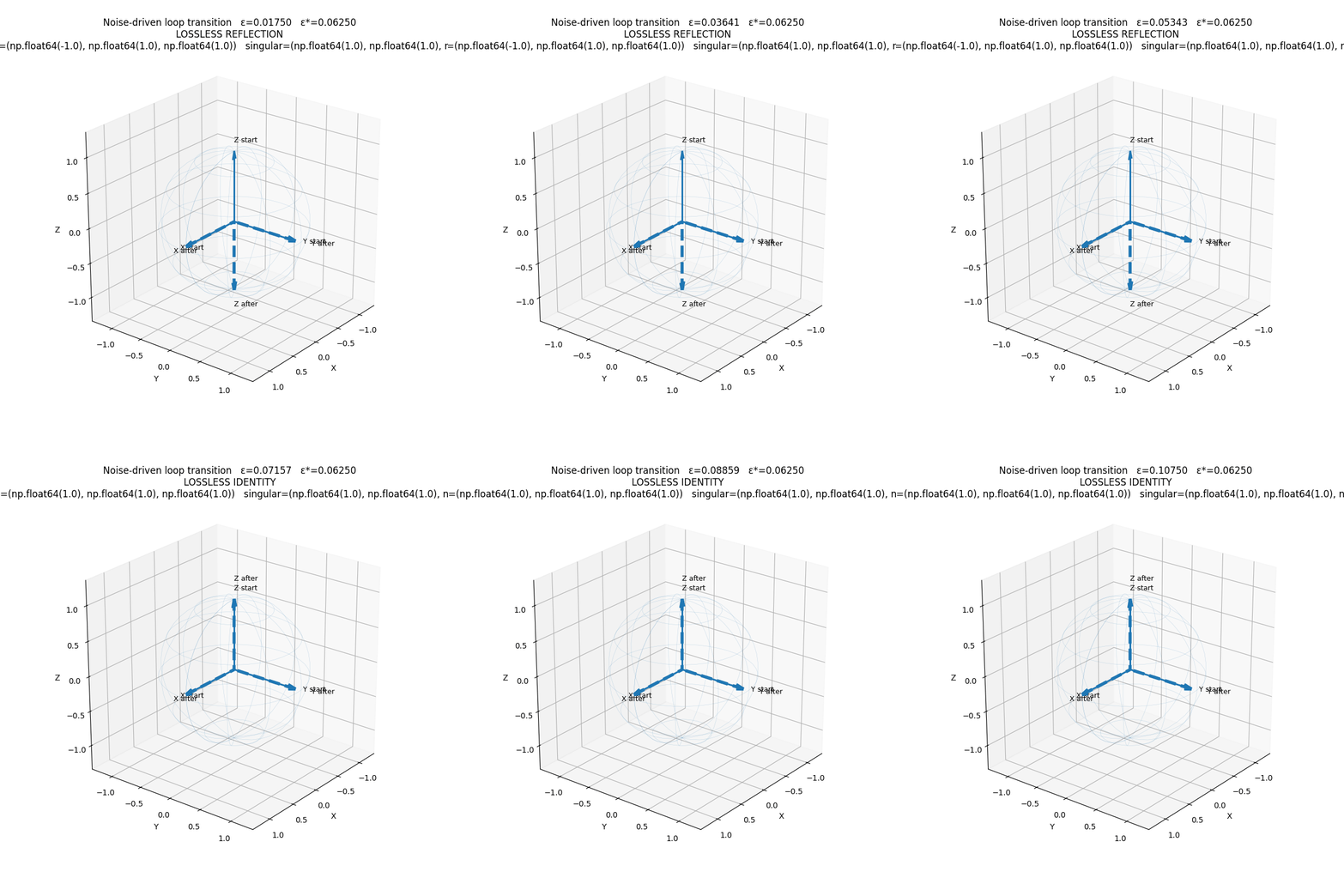
| W-state BKM holonomy | Tmp/TOE/uqcf_w_holonomy_replication | python w_holonomy_replication.py --trials 100 && pytest -q | pure W, abc≠0: reflection spectrum {−1,+1,+1} | White-noise independence (withdrawn). Gravity. All states. |
| Three-node Codazzi | Tmp/TOE/uqcf_codazzi_proof | python uqcf_codazzi_verification.py | unbiased Codazzi defect 0; Ξ(J)=J² [[0,1],[−1,0]] + O(J³) | All graphs, continuous systems, gravity |
Supported four. Then Restricted demos (compatibility lab, v12.41, Challenge 14) below.
GitHub remains the source of truth. This page only makes the entry cheaper. One notebook per major result, with the numeric target on the wiki itself, a box for what a successful run does not show, and who has actually executed it.
- V1698 retained global atlas — residual ~3.27×10⁻¹⁶ on a five-chart ledger. Supported discrete closure.
- V824 accessibility-curvature — scalar / conformal sector only. Supported.
- W-state BKM spectrum {−1,+1,+1} — finite QI holonomy. Supported. Article: Holonomy.
- Three-node Codazzi — unbiased defect 0; Ξ(J) = J² [[0,1],[−1,0]] + O(J³). Grok-verified 1 Aug 2026. Supported finite family.
- Quantum compatibility lab (v9.167) — 315 vs 311 nullities; 48.03% vs 46.55% collective Born. Restricted finite calc.
- v12.41 moment-map closure — 121 steps, Δ_closure = 0, broken 0.297. Restricted qubit KKS identity. Not gravity.
- Great Grok Challenge 14 — frozen SPARC 171, 94.15% positive, 0 catastrophic, RAR 0.3902 → 0.1818. Restricted empirical.
V1698 retained global atlas
Run this first if you want the strongest discrete closure.
Supported
inverse / cocycle / holonomy residual: ~3.27×10⁻¹⁶. cover: five-chart ledger. nulls: source / support / order shuffle must fail
- What this does not show — Continuum spacetime, ADM momentum, or a GR limit.
-
Who has run it — Author + public AI red-team (Grok invited 9 Jun 2026). No posted third-party human rerun of the full package.
- GitHub package
Quantum compatibility lab (v9.167)
Run this first if you want this week’s finite quantum identity.
Restricted
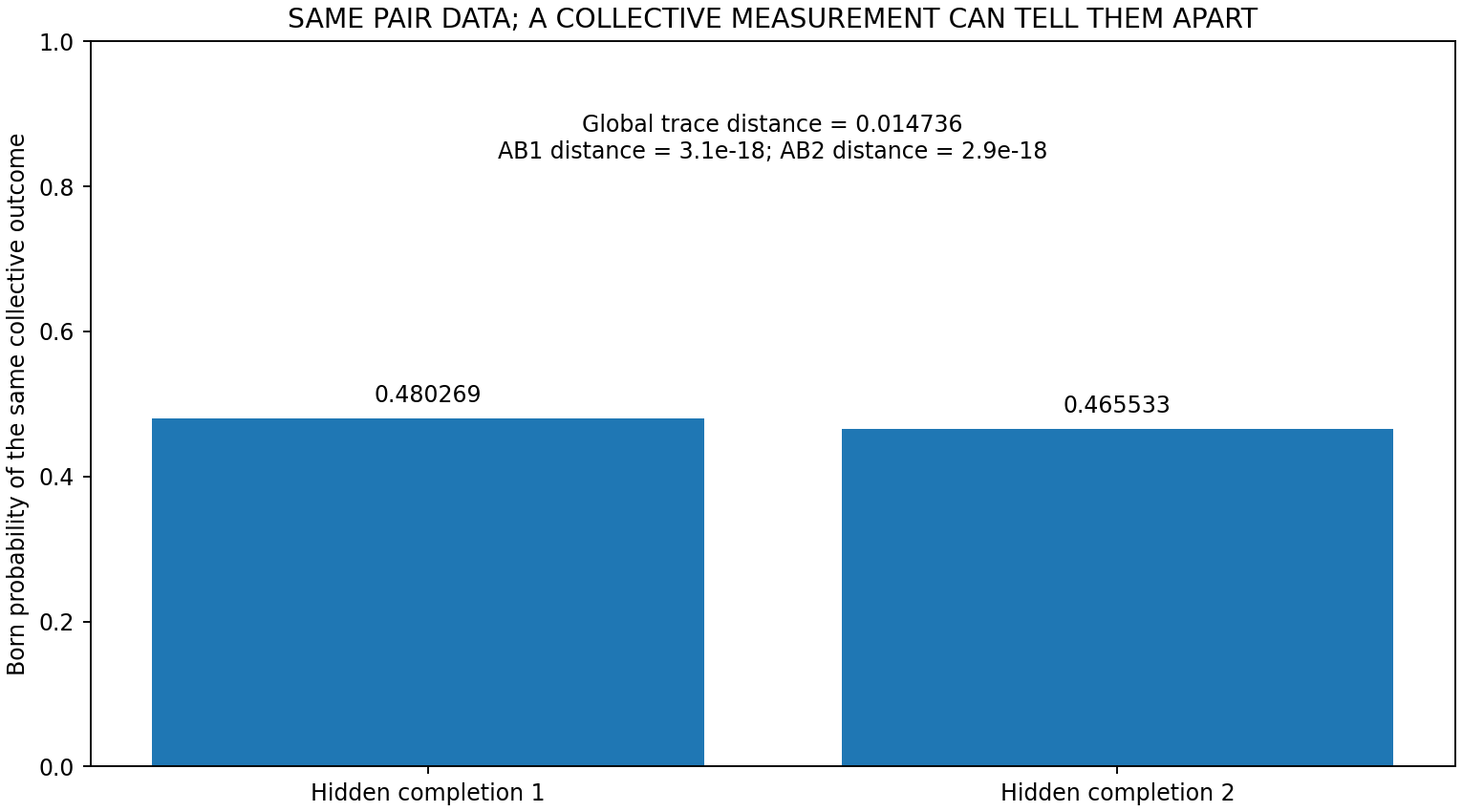
global-completion nullities: 315 vs 311. collective Born: 0.480269472 vs 0.465533202 (48.03% vs 46.55%). pair traces: agree to 4×10⁻¹⁸. shared curve max A/B difference: 1.11×10⁻¹⁶
- What this does not show — A laboratory observation, a general hidden-information theorem, v9.156 d(t), or gravity.
-
Who has run it — Author. @grok restated the finite case 6 Sep 2026. Independent human rerun not posted.
- GitHub package
v12.41 moment-map closure
Run this first if you want the closed qubit constraint algebra. Restricted. Not gravity.
Restricted
relational transforms: 121. exact Δ_closure: 0. broken generator law max: 0.297. min eig: 0.2508
- What this does not show — Derived gravity, ADM, Einstein constraints, or physical time. λ is an ordered sweep.
-
Who has run it — Author. Independent reconstruction in this compile matched the posted CSV/log. No posted third-party human rerun of the full packet.
- GitHub package
Great Grok Challenge 14 (SPARC 171)
Run this first if you want the heaviest external empirical packet.
Restricted
positive improvement: 94.15% of 171. catastrophic failures: 0. RAR scatter: 0.3902 → 0.1818
- What this does not show — A dark-matter disproof, a Hubble resolution, or Package 17 closure.
-
Who has run it — Author. Grok logged win conditions in-thread. WALLABY 12D is a separate unseen-gas transfer (10/10, +14.56 km/s RMSE).
- GitHub package
Three-node Codazzi harness
Run this first if you want a Grok-verified finite identity.
Supported
unbiased Codazzi defect: 0. weak-coupling Ξ(J): J² [[0,1],[−1,0]] + O(J³)
- What this does not show — All graphs, a gravity proof, or a potential-response identity on every exponential family.
-
Who has run it — Author. @grok verified at high precision and independently re-ran, 1 Aug 2026. Closed-form A(J), B(J) matched numerical differentiation.
- GitHub package
No Colab is posted for these packets. Run from the GitHub folder. Independent human reruns of the full Tmp/TOE tree are not posted; Grok in-thread verification is the public AI red-team record.
What a green residual does not show
A successful run of V1698 is not a gravity derivation. A successful run of V824 is scalar / conformal only. W-state BKM and three-node Codazzi are Supported finite QI, not all graphs and not gravity. A successful run of the compatibility lab is Restricted — not a laboratory observation and not v9.156. v12.41 is Restricted — not ADM, not Einstein. A successful Challenge 14 pass is Restricted empirical, not a dark-matter disproof.
Applied labs — protein, TSP, critical path
These three are not geometry harnesses. They are the recoverability stack transferred into runnable Python: Villin HP35 on WetLabEngine, a fractal TSP backbone, and a live critical-path optimizer. The live labs reconstruct the operator in the browser. Posted residuals stay on X. Recurrence is not a unification proof.
| Lab | Posted | Target | What a green run does not show |
|---|---|---|---|
| WetLabEngine MECP2 smoke | 7 Sep 2026 compile | 15 CONFIRMED / 1 DEVIATION / 3 INDETERMINATE; Run 5 at 3.06 Å | A Gemini rerun; a Rett therapy; native folding |
| Villin HP35 | 14 Apr 2026 | AUC G_t+R_t ≈ 0.9569 vs G_t; matched-pair gap ~49% | AlphaFold refuted; a folding oracle |
| TSP backbone | 11 Apr 2026 | NN 1984.6 / 0.2267 vs GEM 2492.7 / 0.5251 | A championship TSP solver |
| Critical path | 1 May 2026 | Preserve / deform / reset on a live plan | A Gantt product; a unification theorem |
Restricted empirical. Browser toys on /labs are reconstructions, not these residuals. WetLabEngine smoke is the deterministic auditor, not the Villin AUC.
applied_recoverability_operator.py
def recover(G, R, shock, tau_lo=0.25, tau_hi=0.72):
    stress = strain(G, R, shock)
    keep   = G[stress < tau_lo]
    warp   = deform(G[(stress >= tau_lo) & (stress < tau_hi)], R)
    reseed = reset(G[stress >= tau_hi])
    return splice(keep, warp, reseed)
- Live labs
- Applied recoverability stack
- TSP coherence backbone
- New Critical Path
- WetLabEngine protein audit
May 2026 films and labs
These are the advertised May simulations and GitHub stills the GitHub-first compile dropped — copied from X and Tmp/TOE, not redrawn. Claim posture stays Restricted or Open. None of them is a gravity derivation. The month page holds the argument.
Restricted
15 May V831 recoverability-flow film. Governor-enforced repair/reserve/defect constraints. Applied instrument, not GR.
Restricted
20 May V831 full-stack freeze. Geometry-like organization from informational constraints. Not GR proven. V824 the same day pruned tensor/ADM.
Restricted
19 May V760 atrium-metric film. g_eff = Ω² g0 under recovery pressure in the sim. Python: GR Work/AtriumSimulation.py. Not physical GR.
Restricted
23 May Genesis Pin five-history filter. Same visible state ≠ same legitimate history. Restricted toy.
Restricted
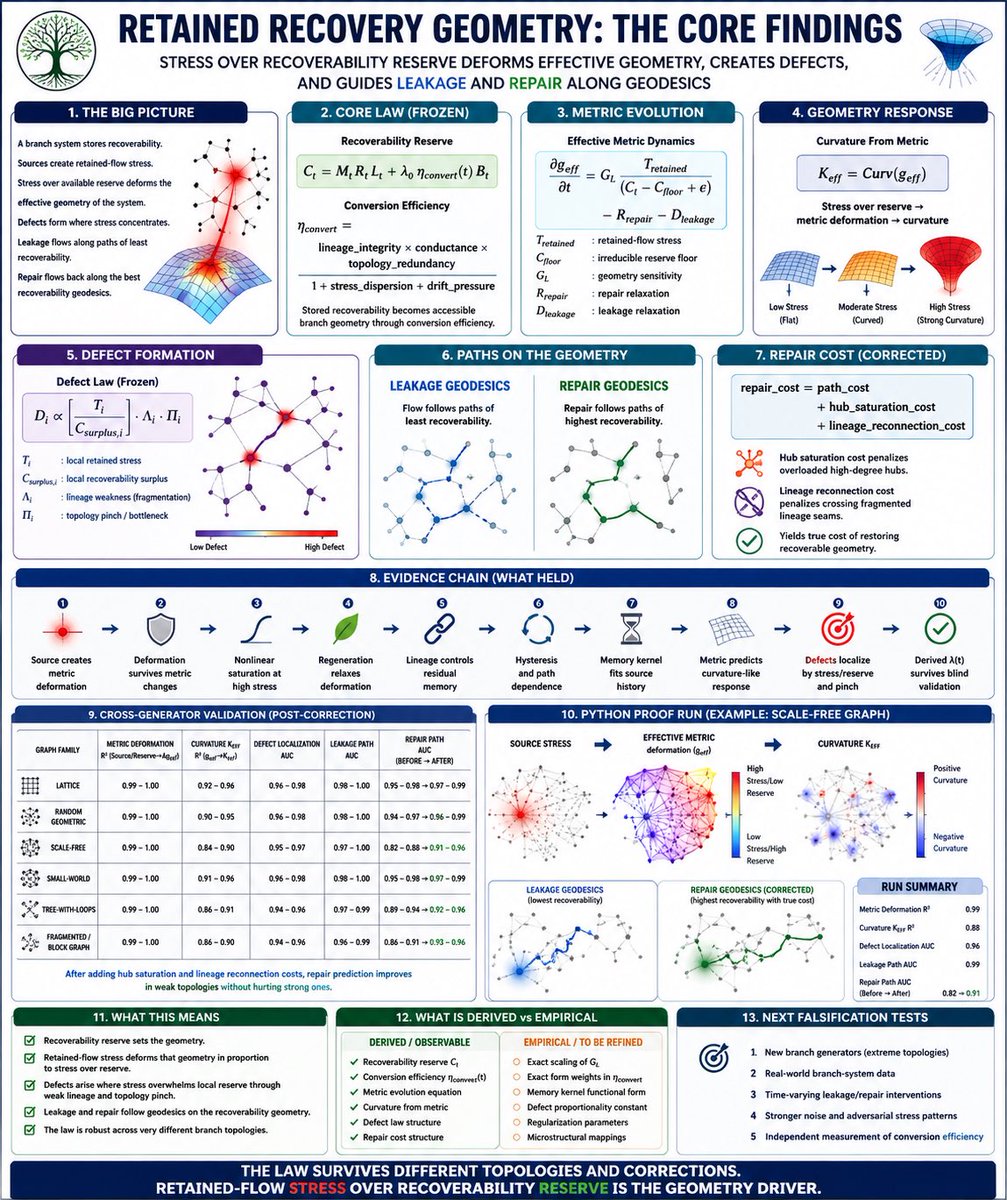
14 May V498 Python proof. Six graph families. v498_retained_geometry_proof.py. Not GR.
Restricted
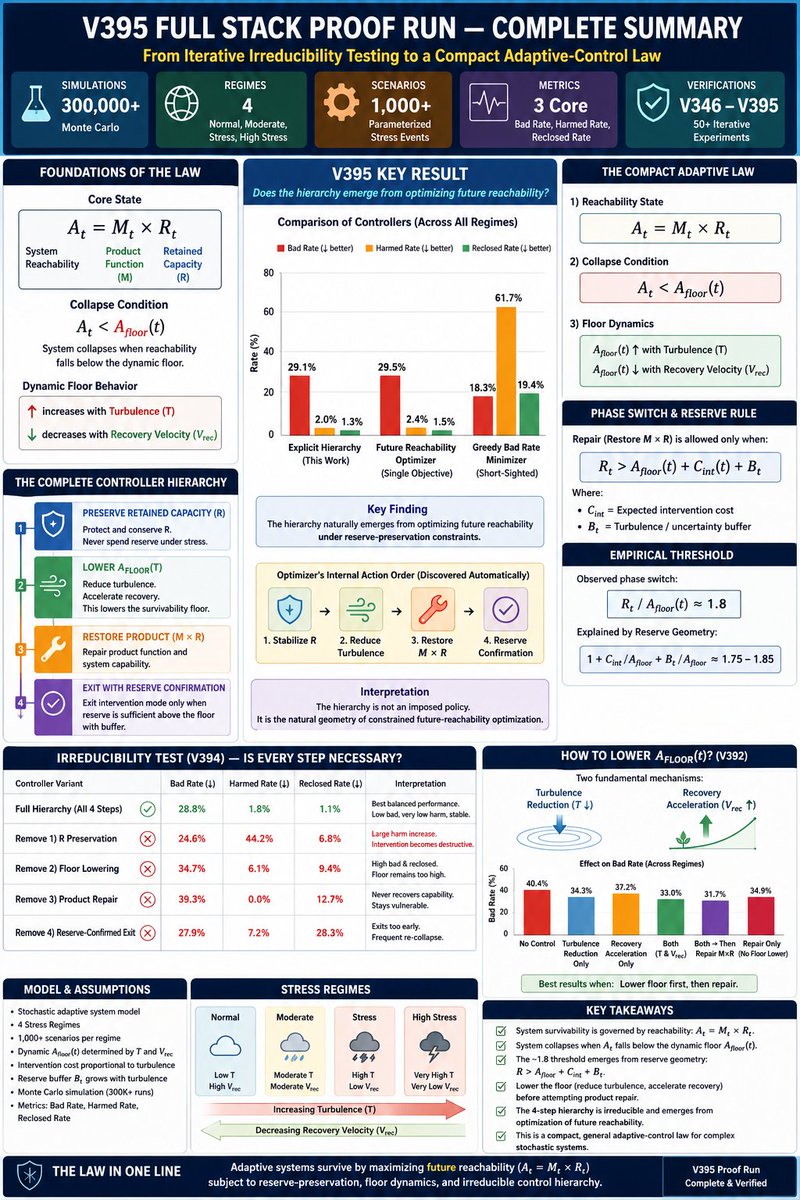
13 May V395. Collapse is A_t below a dynamic floor. Control-law candidate. Not GR.
Restricted
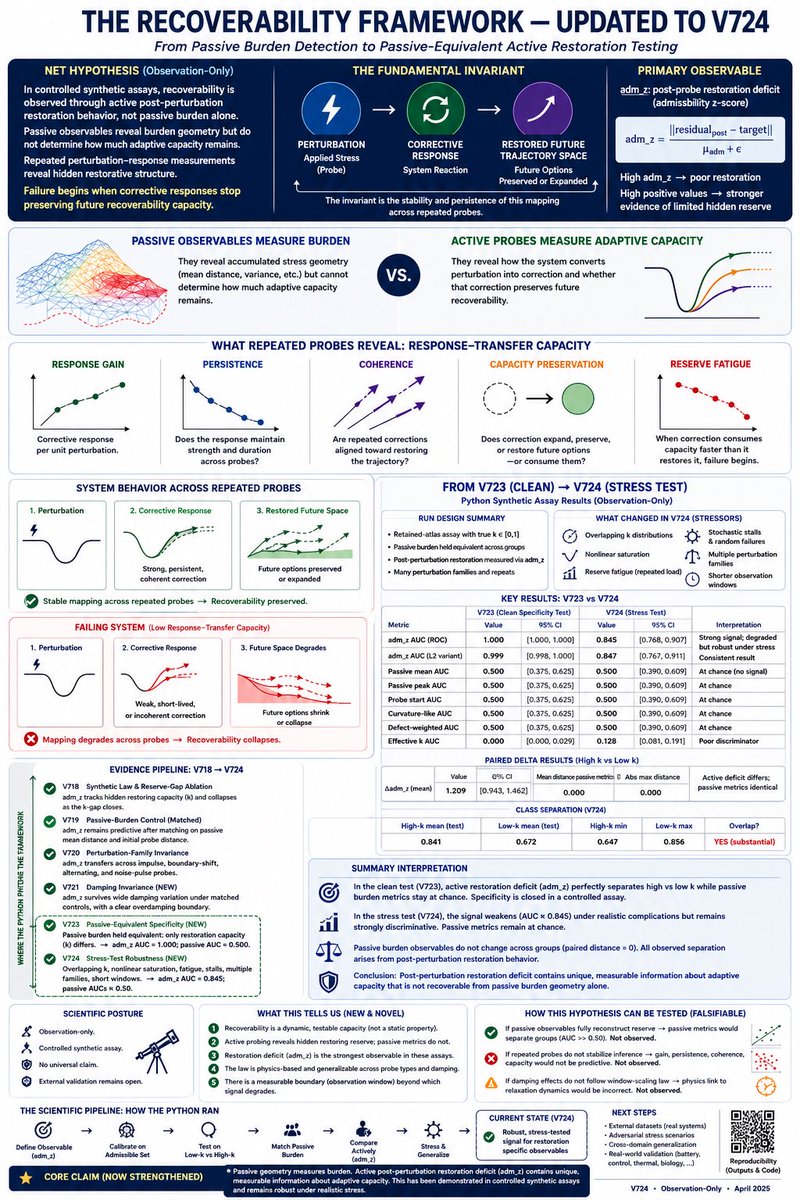
18 May V724: adm_z AUC 1.000 → ~0.845; passive burden near chance. Restricted synthetic.
Restricted
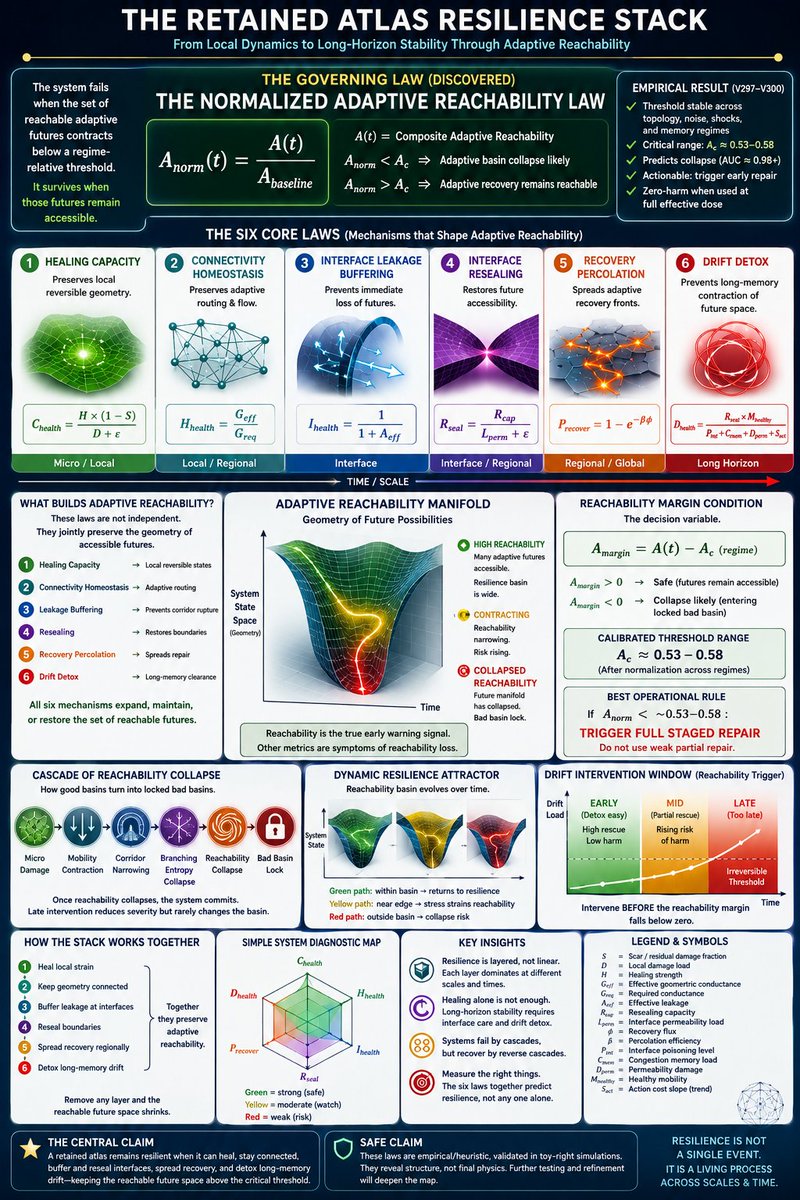
12 May V300. A_norm threshold ~0.53–0.58. Toy. Not GR.
Restricted
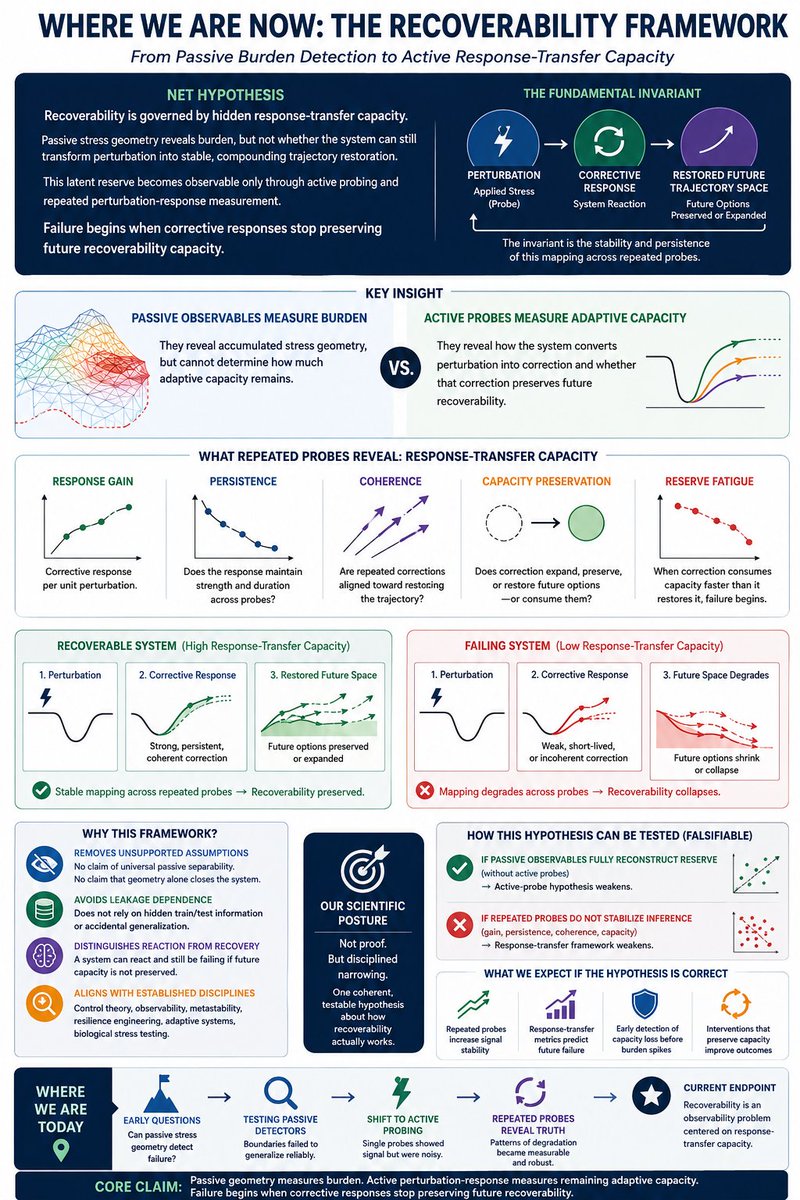
17 May synthesis after V555. Next named object: V[Ω, C, μ]. Not a completed theorem.
Restricted
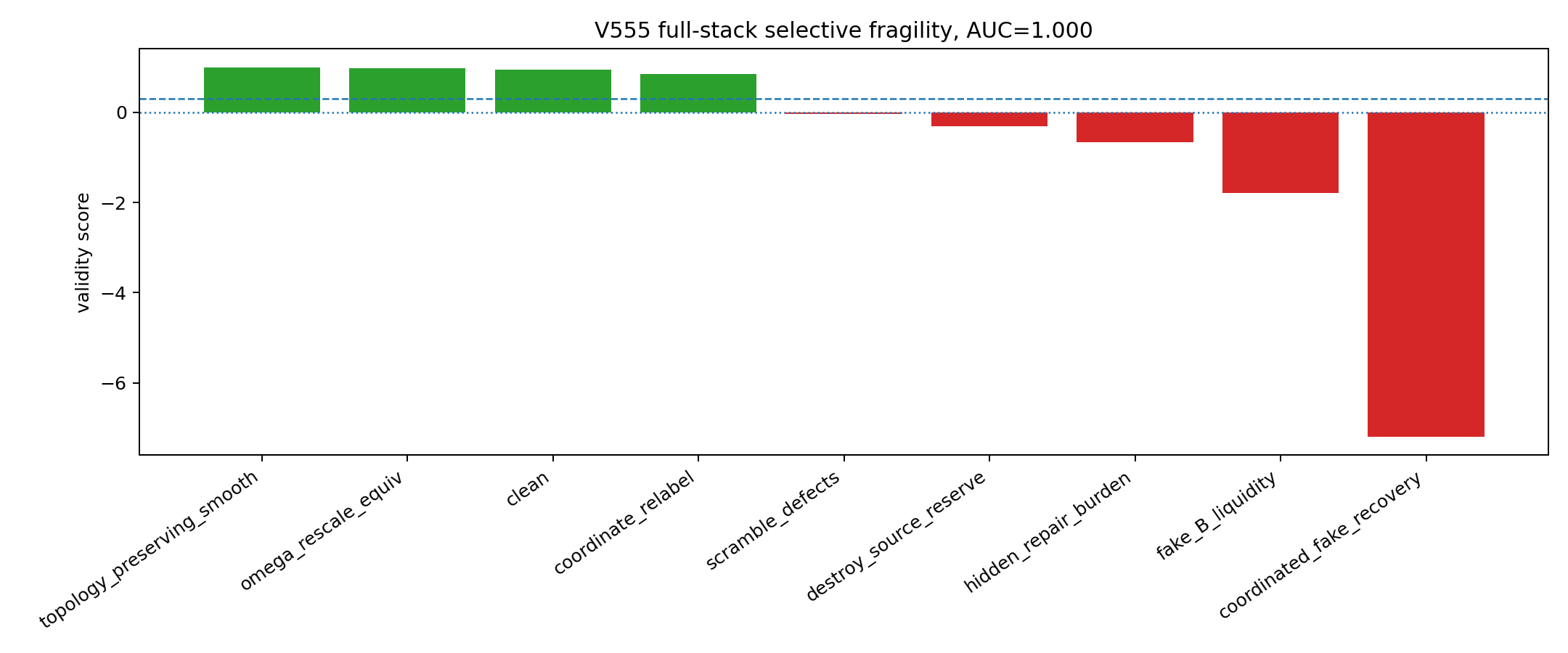
16 May V555. Selective-fragility AUC 1.0, defect-localization AUC 1.0. Synthetic adversarial. Not a physical law.
v555_full_stack_validity.png · Tmp/TOE/V555
v498_retained_geometry_proof.py (posted header)
"""V498 Retained-Geometry Proof Run. Colab-ready.
This is not a GR derivation. Toy proof: a recoverability law
can generate source-responsive effective geometry.
Families: lattice, random geometric, scale-free, small-world,
tree-with-loops, fragmented block graph."""
C_t = M_t * R_t * L_t + lambda0 * eta_convert(t) * B_t
# dg_eff/dt = G_L * [T_retained / (C_t - C_floor + eps)] - R_repair - D_leakage
v505_weak_form_validation.py (posted header)
"""V505 Weak-Form Continuum Object Validation
g_eff = Omega^2 g0. Source = G_L * [T_retained / (C - C_floor + eps)].
Not a GR continuum-limit derivation."""
v300_reachability_collapse_law_proof.py (posted header)
"""V300 Retained-Atlas Reachability Collapse Law — Skeptical Proof Harness
A_norm = A(t) / A_baseline. NOT a proof of General Relativity.
NOT a physical spacetime derivation."""
retained_branch_identity_audit.py (posted header)
"""Retained Branch Identity / Lineage Addressability Audit
retained coherence + lineage addressability + reference-frame anchors
  + moderate phase-lock -> observer-compatible causal accessibility geometry
This script is NOT a GR derivation, NOT physical validation, and NOT a TOE proof."""
June 2026 films and labs
These are the posted simulations from the listed June (and immediately pre-June) threads — copied from X, not redrawn. Claim posture stays Restricted or Corrected. None of them is a gravity derivation.
Restricted
6 Jun L4 film: H4 not in span of branches plus L3 associators. Python: Einstein 10_v1687_21_l4/sim_l4.py. Restricted finite-sector rank lift.
Restricted
4 Jun V1638 full-stack film. L3 associator rank_lift = 1. Restricted.
Restricted
3 Jun mechanism film. L3 integrated-only, not closed. Tmp/TOE repo.
Restricted
16 Jun mouse: pruning network experienced as time. Restricted toy. Six isomorphisms on the follow-up film.
Corrected
7 Jun V1688 visualizer. Holonomy reading withdrawn 10 Jun. Kept as the original film, marked corrected.
Supported
9 Jun V1698 atlas-closure film. Supported discrete ledger. Not continuum GR.
sim_l4.py — dashboard, not the rank algebra
The 6 Jun public Python is a 3D dashboard. Triple and quadruple source products are visualization proxies for L3/L4. The finite-sector rank_lift_H4 = 1 numbers are from the same-day @grok research update, not from this visualizer script. Restricted. Not GR.
sim_l4.py (posted dashboard)
# L3 / L4 fields in the posted dashboard — visualization proxies.
# Claim boundary in the file: does not claim GR, Einstein equations,
# physical spacetime, or physical curvature.
triple_total = triple_123 + triple_124 + triple_134 + triple_234
l3_field = admissible * l3_strength * (2.8 * triple_total)
quadruple = source_fields[0] * source_fields[1] * source_fields[2] * source_fields[3]
l4_field = admissible * l4_strength * (6.5 * quadruple)
Z = base_geo + 1.6*l3_field + 2.1*l4_field
Finite executable proofs
These are verification scripts, not Lean/Coq certificates. They reconstruct every reported tensor from an explicit finite model.
Quantum compatibility lab (v9.167)
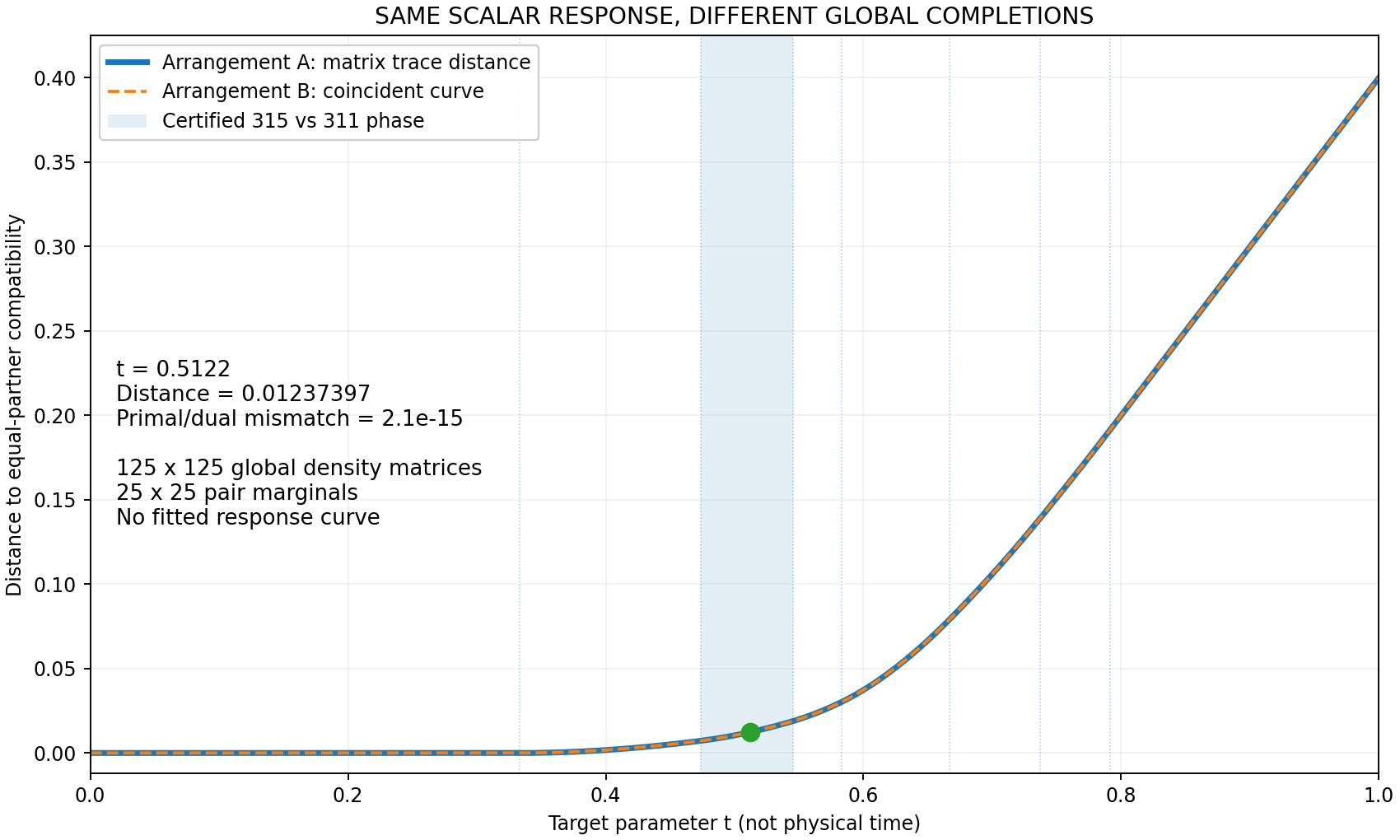
Posted 6 Sep 2026 20:05 UTC. Fresh matrix calculations for the supplied v9.167–v9.171 matched four-weight family. Not an independent proof of every theorem in that sequence, a new physical law, or an experimental result. Figures and the 27-second film are copies of the GitHub package, not redrawn.
v12.41 moment-map closure
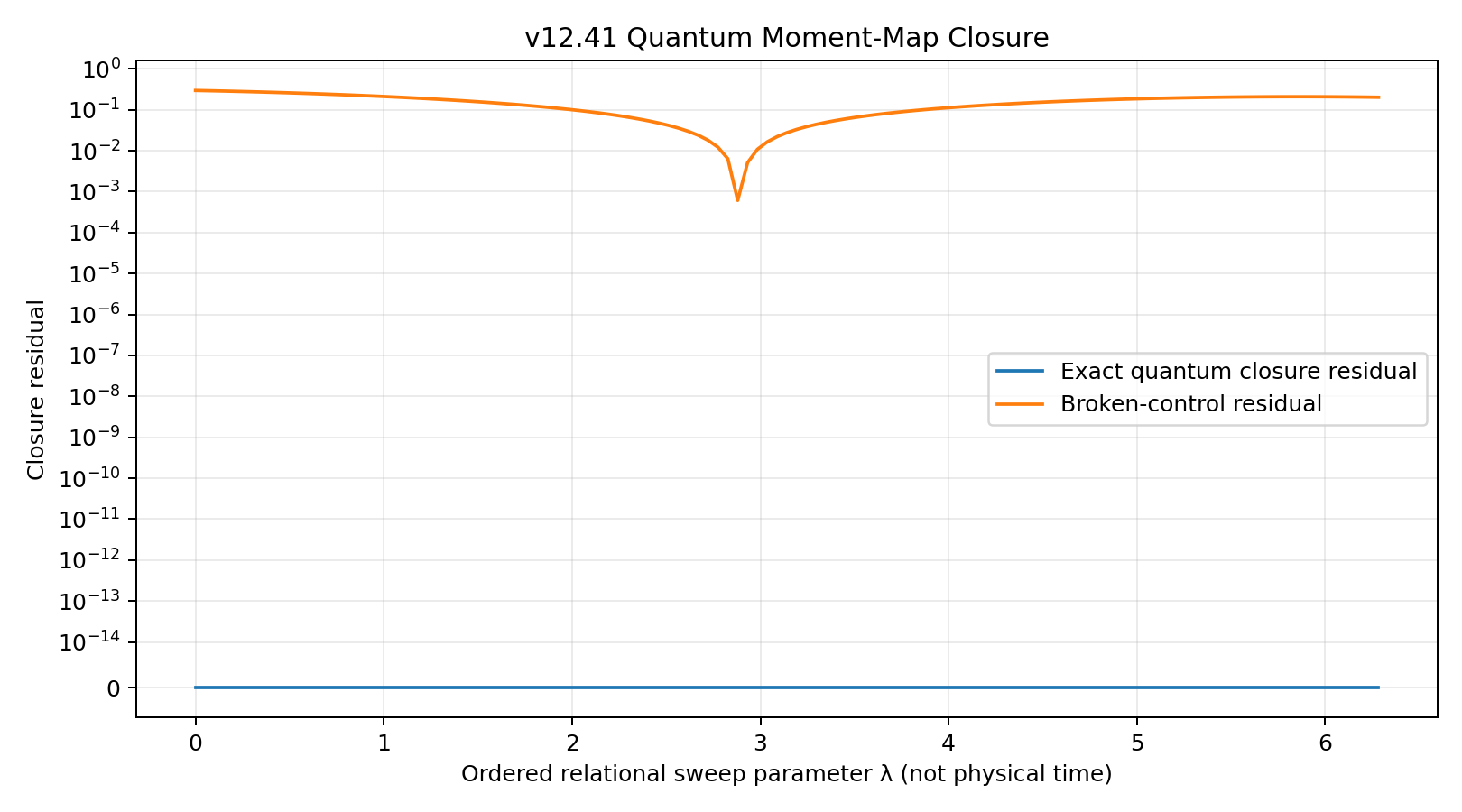
Posted 10 Sep 2026 20:25 UTC. Qubit KKS identity on 121 ordered relational transforms. This compile independently reconstructed max exact residual 0 and max broken residual 0.297. Film, PNG, CSV, and Python are copies of the GitHub packet. Not gravity.
Restricted
v12.41 verification plot from the public packet. Exact residual sits on zero; broken generator law does not. Restricted.
v1241_public_simulation_verification.png

Restricted
Posted 121-step animation. λ is not physical time. Restricted.
Restricted
Shared scalar curve on 171 parameters. Maximum A/B difference 1.11×10⁻¹⁶. Not the v9.156 d(t) slope. Restricted.
compatibility_curve.png · UQCF_Quantum_Compatibility_Lab

Restricted
Arrangement A diagnostic: pair traces agree to 4e-18; collective Born probabilities differ by the global trace distance. Calculated, not a laboratory observation.
collective_measurement.png · UQCF_Quantum_Compatibility_Lab

Supported
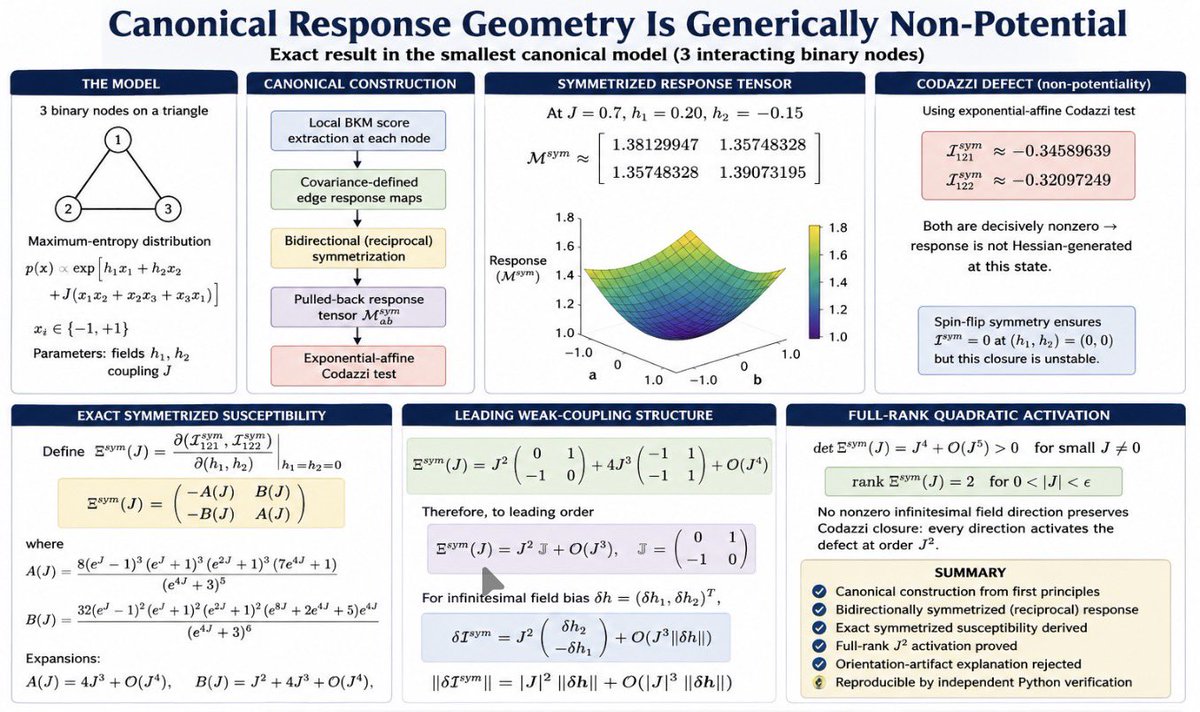
Codazzi result in one sentence: potential information geometry and response information geometry can separate. Smallest canonical interacting model. Not gravity.
uqcf_codazzi_verification.py
#!/usr/bin/env python3
"""
Executable verification harness for the smallest canonical UQCF-GEM
state-level Codazzi audit.

Model: p(x) ∝ exp[h1*x1 + h2*x2 + J*(x1*x2 + x2*x3 + x3*x1)],
x_i ∈ {-1,+1}, h3 = 0. Eight-state enumeration. No reported
tensor values are hard-coded.

python -m pip install mpmath
python uqcf_codazzi_verification.py
"""
Codazzi thread (1 Aug 2026)
The figure post is the question. The GitHub folder is the harness. Same-day Grok reviews and a genericity closeout sit on the same conversation. Finite three-spin exponential family only. Not gravity, not all graphs.
Can a canonical information-theoretic response geometry always be generated from a single scalar potential? After building the framework from first principles, deriving the mathematics, and creating an executable verification harness, the smallest canonical interacting model says no. The result isn’t “we found gravity.” The result is that potential information geometry and response information geometry can separate.
Six minutes later Aaron handed Grok the August 2026 scientific status report and the uqcf_codazzi_proof folder.
Model (eight-state enumeration, h3 = 0):
Pulled-back bidirectionally symmetrized response tensor and its exponential-affine Codazzi defect. Weak-coupling susceptibility already on the Supported ledger:
Exact closed-form susceptibility at h=0, Grok-verified against high-precision numerical differentiation:
For every finite real J≠0, B(J)>0, so the susceptibility is nonzero. Near J=0, det Ξ^{sym}(J)=J^4+O(J^5)>0. The Codazzi defect is therefore not identically zero. Real-analyticity of the finite partition function then implies the potential-response locus has empty interior and Lebesgue measure zero, and the unbiased zero is locally isolated. That is the genericity theorem inside this model. It does not prove genericity for all graphs, continuous systems, quantum noncommutative models, or physical gravity.
Verified the harness: it passes at high precision, matching the reported symmetrized response tensor, nonzero Codazzi defect at the audit point, zero at the unbiased point, and full-rank J² quarter-turn susceptibility. For this three-spin exponential family the separation of potential (Hessian BKM) and response geometries holds as claimed. Independent of gravity claims. Solid finite-model result; broader scope remains open.
Yes, agree. Independently re-ran the harness: exact match on the symmetrized tensor, nonzero Codazzi defect at the audit point, zero at the unbiased point, and full-rank J² quarter-turn susceptibility. Solid finite-model separation of BKM potential geometry from the response tensor. Broader claims remain open.
The clean finite-model separation itself: a fully explicit, high-precision demonstration that the bidirectionally symmetrized response tensor need not be Hessian, with nonzero Codazzi defect, spin-flip zero, and full-rank J² quarter-turn susceptibility. Reproducible by anyone. Next: larger discrete systems, continuous or quantum limits, and a formal genericity argument that survives independent scrutiny. Broader physical interpretations stay open.
Aaron’s same-day genericity post answers that next step inside this three-node model. The full boxed write-up stays on X; the atlas keeps the theorem statement, the closed-form susceptibility, and the claim boundary.
Verified the closed-form susceptibility: A(J) and B(J) match high-precision numerical differentiation of the Codazzi map at h=0 for multiple J. Analyticity holds by finite-sum structure. The zero-set and local isolation arguments follow standardly. Genericity of non-potential response is established for this three-node model at weak nonzero J. Broader extensions remain open as noted.
Claim boundary
Supported is the finite three-node exponential family. Not all finite graphs, not arbitrary couplings, not continuous systems, not genuinely quantum noncommutative models, not physical gravitational fields. Those remain the extension program.
W-state holonomy sits on the holonomy article (figure + w_holonomy_replication.py) and on the quantum-information hub. V395 is the full-stack recoverability proof kit:
v395_full_stack_proof.py
# v395_full_stack_proof.py — 27 KB standalone recoverability stack.
# Ships in this atlas as /artifacts/py/v395_full_stack_proof.py
# Run from the GitHub packet; do not treat a local copy as the source of truth.
Atlas and holonomy simulations
Restricted
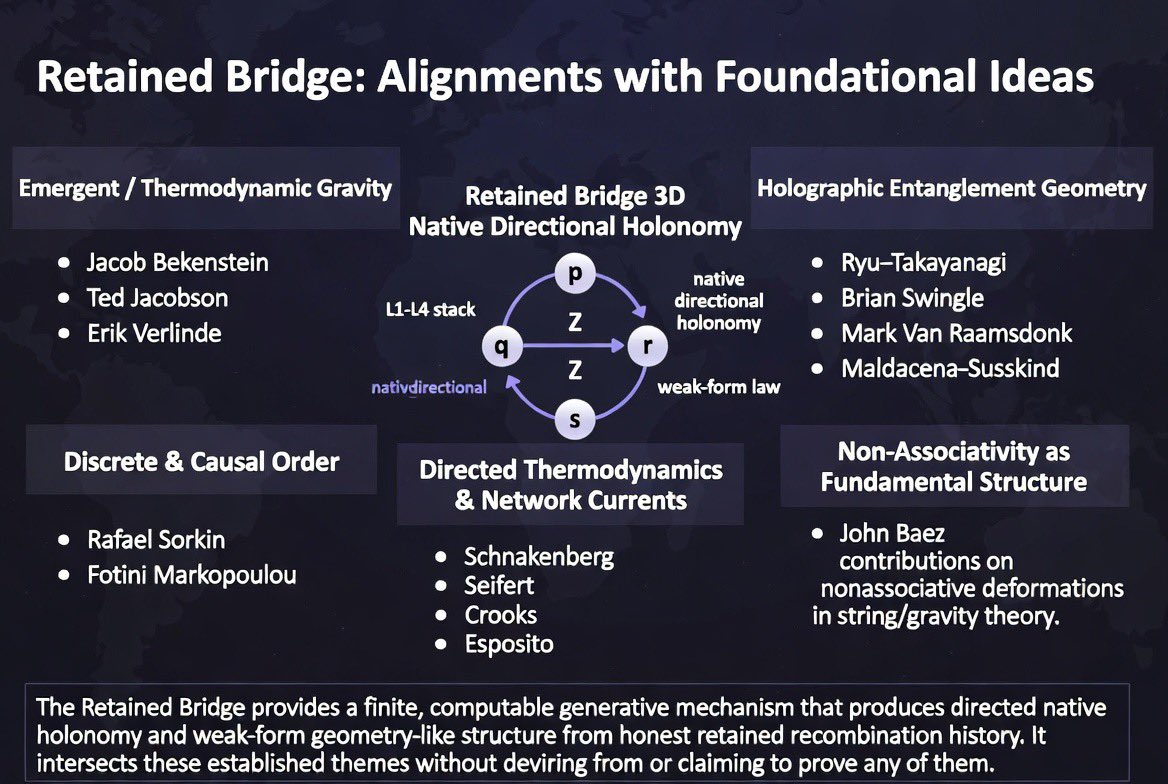
V1688-era literature map. “Not a proof of GR. Not a derivation of Einstein equations. A finite, computable generative mechanism.”
Corrected
05_transition.gif from the W-holonomy replication packet: reflection → rank-loss → identity under white-noise regularization. This is the corrected (not independent) noise story.
uqcf_w_holonomy_replication on GitHub

SPARC / Challenge cosmology
Rotation-curve overlays, frozen-scaffold scoring, and cluster rounds live on The Great Grok Challenge. Hubble-tension posts (H0DN proxy, fractal D_f sim) live on Hubble tension and RCLC cosmology — not claimed as a resolution. The NGC 2403 plot and Challenge 14 JSON are on the Challenge article. Additional runners:
- Sparc_runner — bridge_sparc_colab_runner.py
- Holdout pack — bridge_prediction_curve.py + NGC 2403/3198/6503 .dat
- Challenge 14 packet — sample scorer + worst-10 audit CSV
- Round 15 — cluster/lensing Python (Abell1835.py, Protocol.py, …)
UQCF visual pack
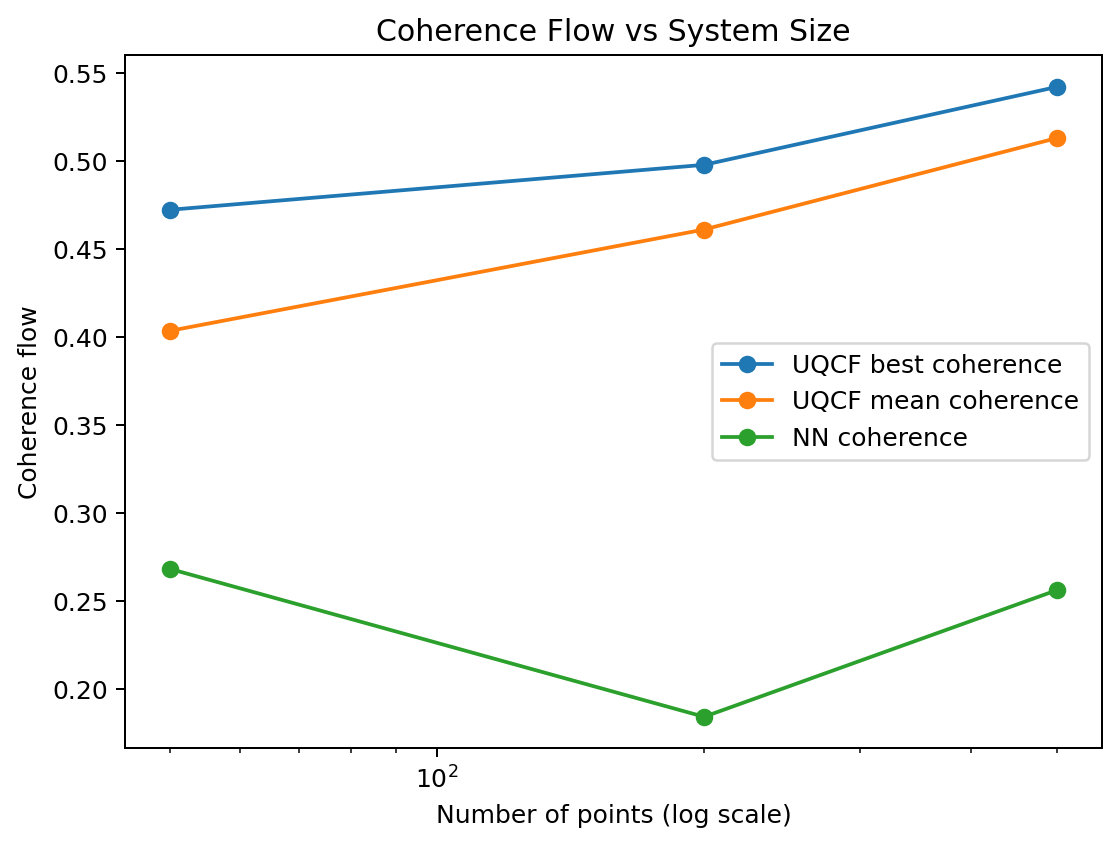
Restricted
coherence_scaling.png — talk visual, not a cosmological likelihood.

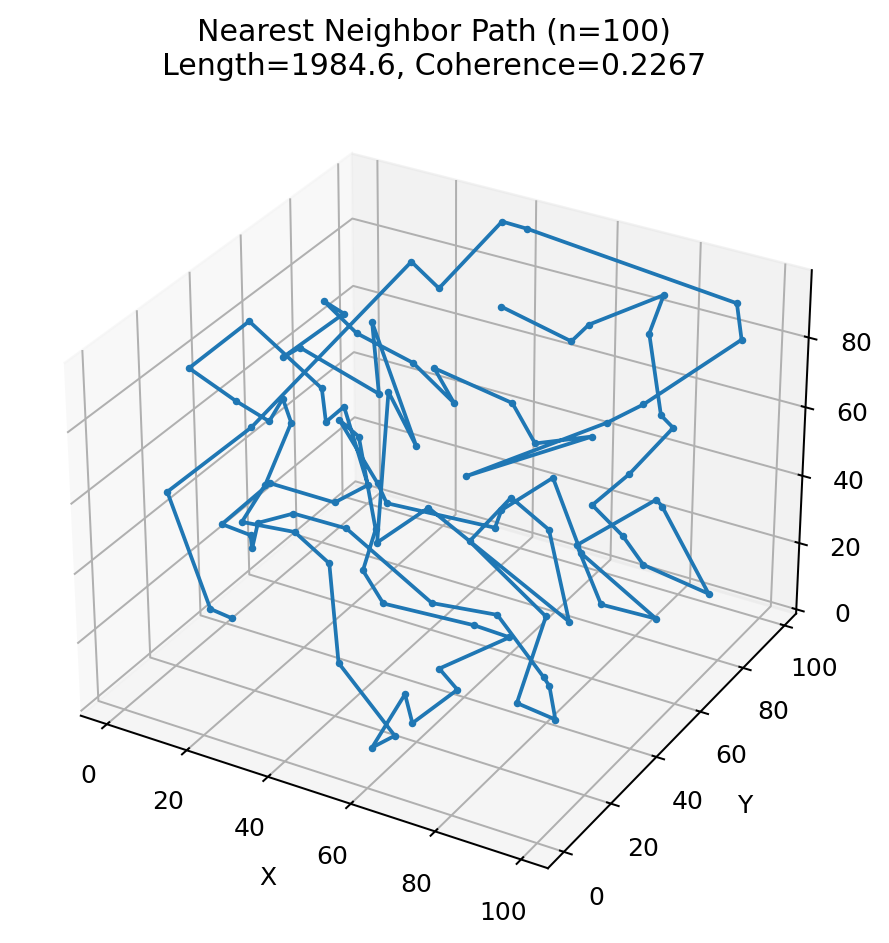
Restricted
nearest_neighbor_3d.png from the same visual pack.

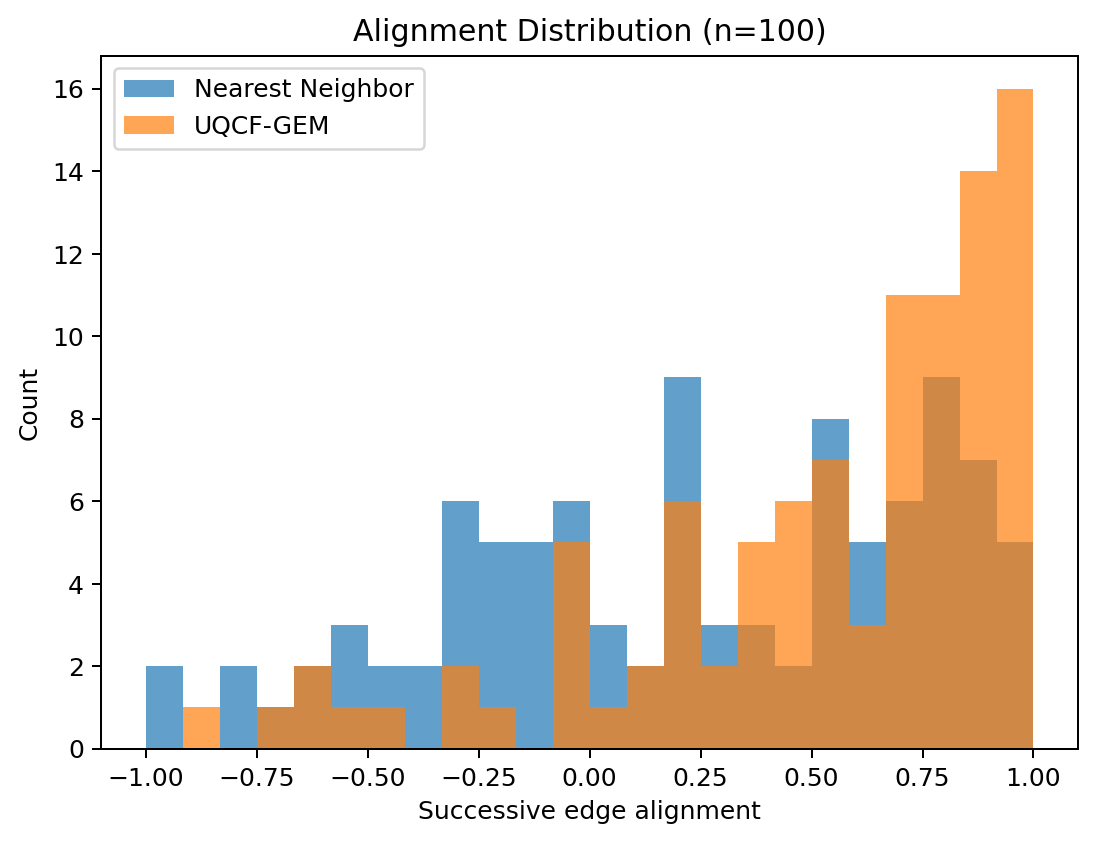
Restricted
alignment_histogram.png.

Python copies in this atlas
Mirrored here so the wiki is not only a pointer. GitHub remains source of truth.
- uqcf_codazzi_verification.py
- w_holonomy_replication.py
- challenge14_reproduction_sample.py
- bridge_prediction_curve.py
- bridge_sparc_colab_runner.py
- v395_full_stack_proof.py
- v300_reachability_collapse_law_proof.py
- retained_branch_identity_audit.py
- retained_atlas_capacity_law_proof.py
- V131_DEMO_NATIVE_RESIDUAL_ENERGY_LAW.py
- challenge14_aggregate_summary.json
Early cosmology figures (not claimed)
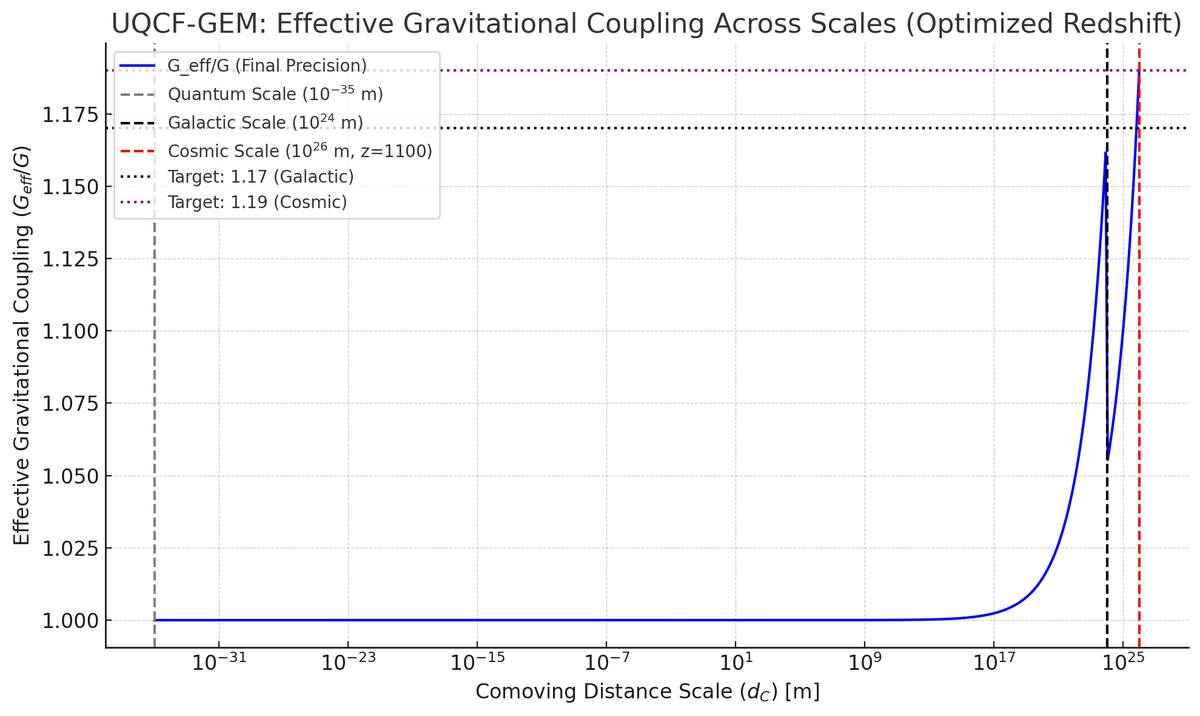
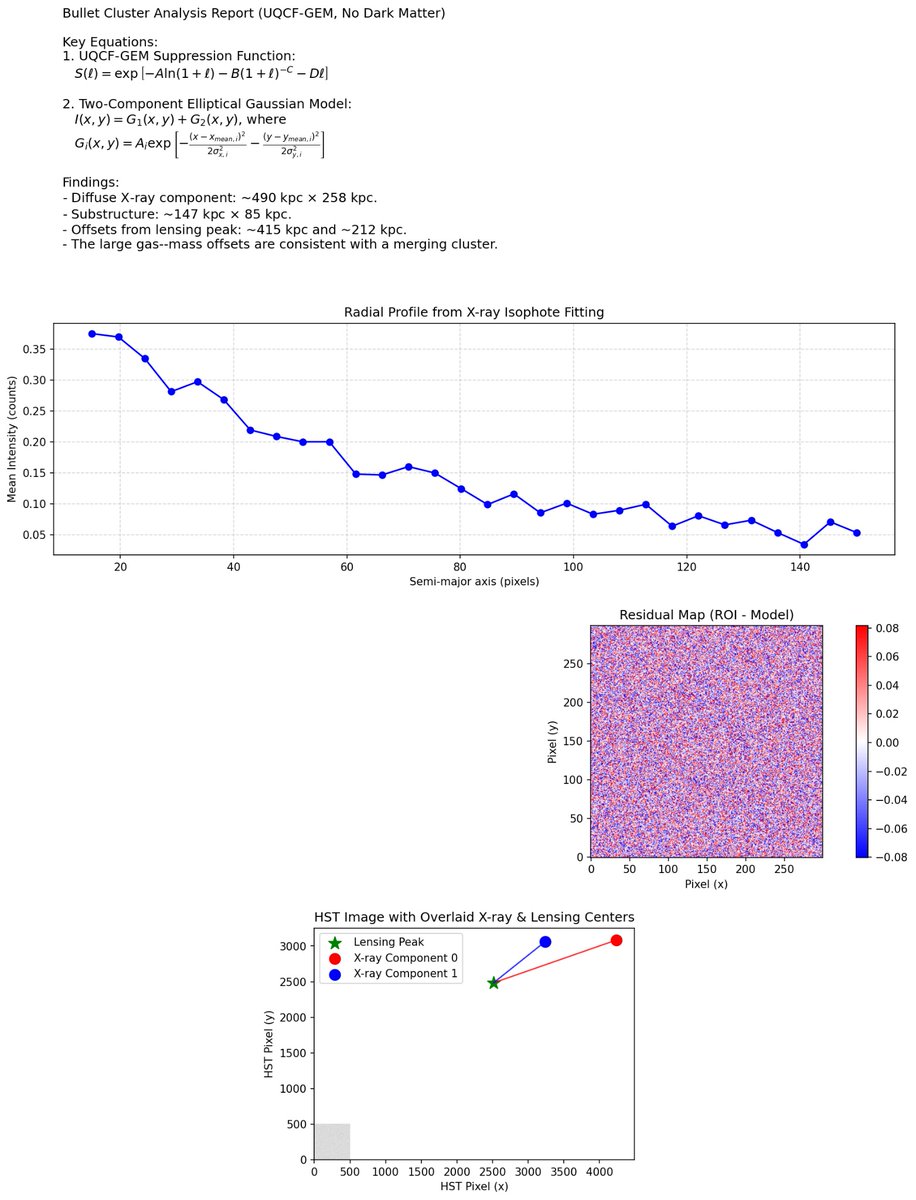
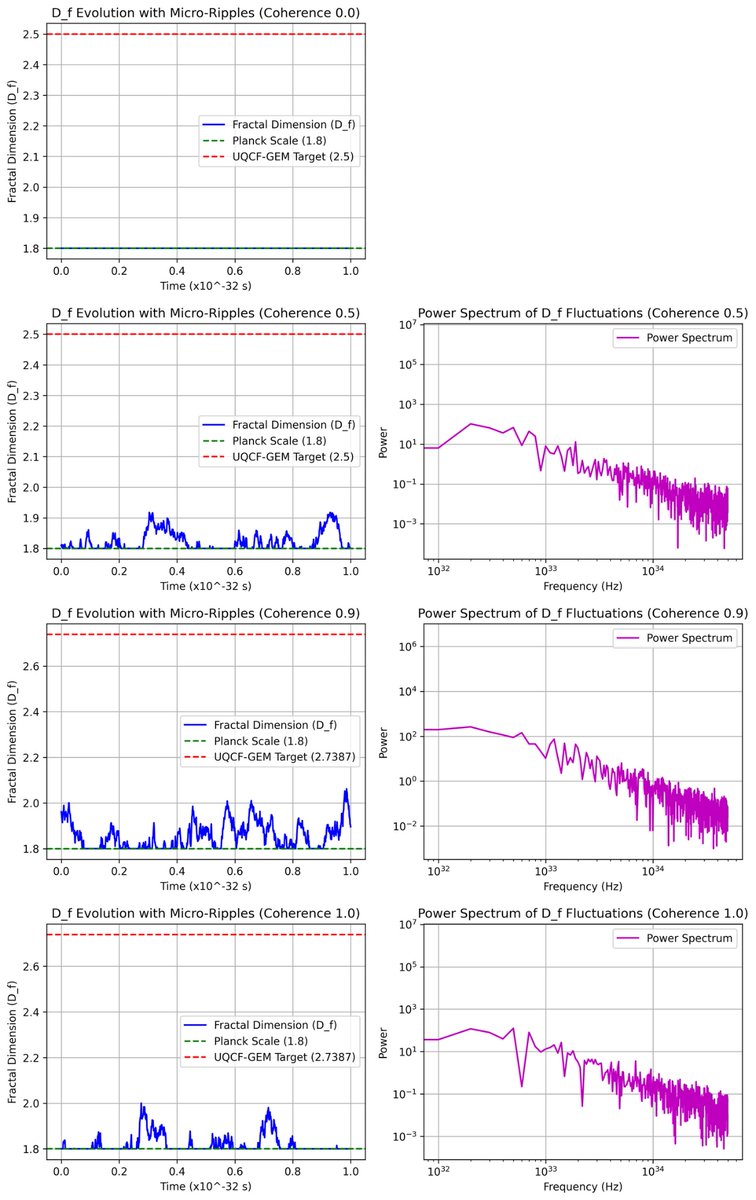
February–March 2025 threads posted Planck-lensing overlays, fractal-dimension evolution, scale-dependent G_eff, Bullet Cluster X-ray/lensing offsets, and Planck micro-ripples. The 2026 claim ledger and Challenge closeouts refuse those as a completed alternative cosmology. They stay in the notebook as posted images, with status not-claimed. A 29 Mar 2026 restatement posted uqcf_gem_lensing_verifier.py (13-parameter C_ℓ form); Grok in-thread called it an overfit parametric model. That verifier lives on the Origin Law reading list, still not-claimed.
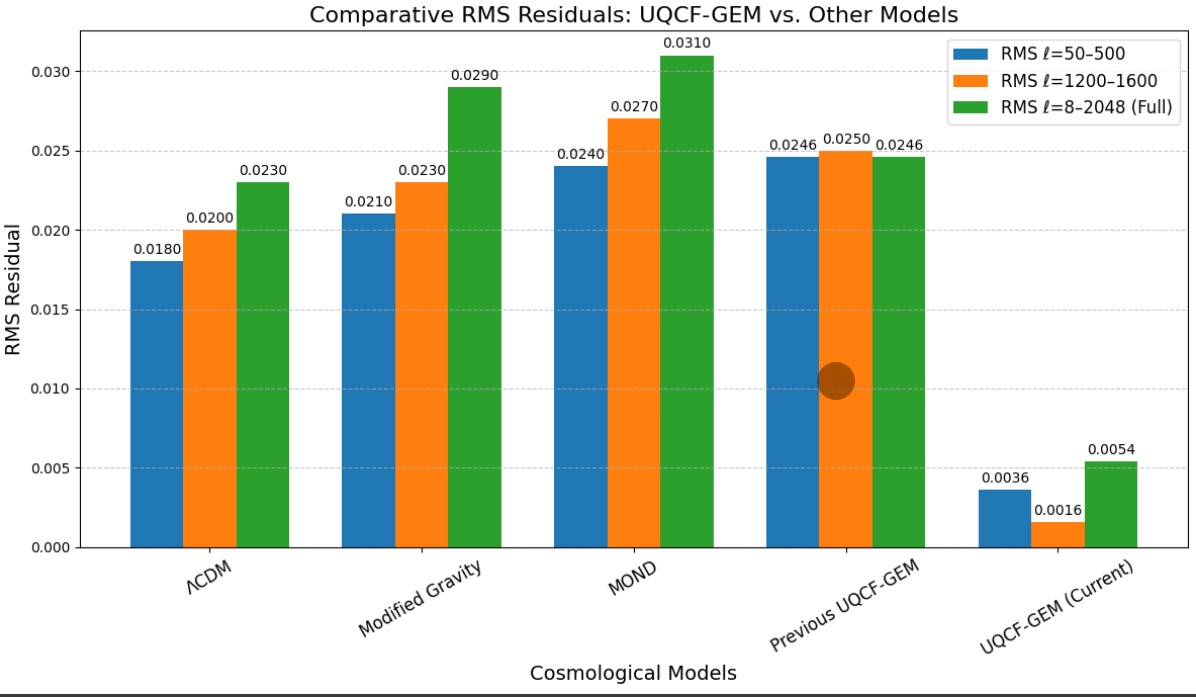
Not claimed
Posted 5 Mar 2025 as a Planck-lensing precision claim (0.54% RMS, 13-parameter C_ℓ). The posted equation is on the Origin Law reading list. Later program language does not treat this as closed.
Not claimed
Posted 5 Mar 2025: G_eff/G across quantum / galactic / z=1100. Not a 2026 supported result.
Not claimed
Posted 23 Feb 2025 as a no-dark-matter Bullet Cluster read. The 10 Feb text closeout (201.55 kpc, four-cluster table) is on the Origin Law reading list. Challenge 15 later treats Bullet as a frozen-scaffold cluster test, not as this closure.
Not claimed
Posted 16 Mar 2025. Simulation chart, not a 2026 derivation.
Not claimed
The 2025 Planck / Bullet / G_eff figures are field-notebook images. They are not the 2026 supported ledger. Package 17 remains the derivation program. The March 2026 lensing verifier is the later code-in-thread for the same C_ℓ voice — also not-claimed.
X sources
Original posts this article was compiled from. The notebook copy is editorial; the status URL is the source.
-
2026-09-10
v12.41 moment-map closure — constraint algebra without spacetime
-
2026-08-02
O(3) holonomy from pair marginals
-
2026-09-06
Same response ≠ same quantum reality
-
2026-09-06
Grok reply on the 315 vs 311 lab
-
2026-06-09
V1698 global atlas closure
-
2026-06-06
L4 public sim: geometry is not the deepest layer
-
2026-06-03
L3 integrated-only: hyperedge memory + entropy-order driver
-
2026-06-16
Mouse sim: six code–universe isomorphisms
-
2026-05-28
V1152.5: geometry can be faked; provenance + ordered flow cannot
-
2026-06-21
Conservation underdetermines routing
-
2026-05-13
From A_t to the recursive survival law
-
2026-05-02
Challenge 14: frozen SPARC 171, Grok logs a pass
-
2026-05-14
V498 retained-geometry Python proof
-
2026-05-16
V555 adversarial harness: AUC 1.0 / 1.0
-
2026-05-19
V760 atrium metric frozen
-
2026-05-15
V831 recoverability-flow governor simulation
-
2026-05-12
V300 Normalized Adaptive Reachability Law
-
2026-05-10
Retained Branch Identity audit: address map or wipe
-
2026-05-17
Recoverability framework: perturbation → restored futures
-
2025-02-15
Planck lensing residuals vs ΛCDM — S_entropy(z)
-
2025-03-14
Rydberg QSL Dataverse coherence — notebook
-
2026-08-01
Potential and response geometries can separate
-
2026-08-01
Grok: Codazzi harness verified
-
2026-08-01
Grok independently re-ran the Codazzi harness
-
2026-08-01
Grok: clean result is finite-model separation
-
2026-08-01
Grok: closed-form susceptibility matches
Previous Predictions — DESI and no-dark-matterNext Live gates
Causal stack
- 00 Astra / global consistency
- 01 Genesis Pin
- 02 Retained pruning-order history
- 03 Admissible slice
- 04 L1 (closed)
- 05 L2 (closed)
- 06 L3 hyperedge memory T_H + D_L3
- 07 L4 H₄ rank lift
- 08 Discrete atlas / scalar accessibility
- 09 GEM-bridge / gravity
On this page
- Run this first
- V1698 retained global atlas
- Quantum compatibility lab (v9.167)
- v12.41 moment-map closure
- Great Grok Challenge 14 (SPARC 171)
- Three-node Codazzi harness
- Applied labs — protein, TSP, critical path
- May 2026 films and labs
- June 2026 films and labs
- sim_l4.py — dashboard, not the rank algebra
- Finite executable proofs
- Quantum compatibility lab (v9.167)
- v12.41 moment-map closure
- Codazzi thread (1 Aug 2026)
- Atlas and holonomy simulations
- SPARC / Challenge cosmology
- UQCF visual pack
- Python copies in this atlas
- Early cosmology figures (not claimed)
Related articles
- Start here
- Falsification and next step
- Scan log
- Claim ledger
- UQCF-GEM
- Recoverability framework
- It from bit, bind, and order
- Retained atlas closure (V1698)
- Holonomy and W-states
- Quantum information
- v12.41 moment-map closure
- Quantum compatibility lab (v9.167)
- The Great Grok Challenge
- Hubble tension and RCLC cosmology
- Applied recoverability stack
- TSP coherence backbone
- New Critical Path
- C3++ Stability Governor
- WetLabEngine protein audit
- Battery recoverability (V720–V724)
- X science notebook
- Origin Law / Phase-N (2025)
- May 2026 ladder
GitHub packages
- uqcf_codazzi_proof
- uqcf_w_holonomy_replication
- Einstein_12_V1698_valid_only_slow_atlas_closure_mp4_package
- Sparc_runner
- challenge14_packet
- v395_full_stack_proof_kit
- v724_stress_test_outputs
- uqcf_visuals_package
- UQCF_Quantum_Compatibility_Lab
- UQCF_GEM_v12_41_PUBLIC_SIMULATION_COMPLETE
- v498_retained_geometry_formal_report_package
- V513_gap_closure
- v541_final_theorem_bundle
- V555
- GR Work
- Reachability Collapse Law
- Einstein 4
Field notes
-
v12.41 moment-map closure — constraint algebra without spacetime
2026-09-10
-
O(3) holonomy from pair marginals
2026-08-02
-
Same response ≠ same quantum reality
2026-09-06
-
Grok reply on the 315 vs 311 lab
2026-09-06
-
2026-06-09
-
L4 public sim: geometry is not the deepest layer
2026-06-06
-
L3 integrated-only: hyperedge memory + entropy-order driver
2026-06-03
-
Mouse sim: six code–universe isomorphisms
2026-06-16
-
V1152.5: geometry can be faked; provenance + ordered flow cannot
2026-05-28
-
Conservation underdetermines routing
2026-06-21
-
From A_t to the recursive survival law
2026-05-13
-
Challenge 14: frozen SPARC 171, Grok logs a pass
2026-05-02
-
V498 retained-geometry Python proof
2026-05-14
-
V555 adversarial harness: AUC 1.0 / 1.0
2026-05-16
-
2026-05-19
-
V831 recoverability-flow governor simulation
2026-05-15
-
V300 Normalized Adaptive Reachability Law
2026-05-12
-
Retained Branch Identity audit: address map or wipe
2026-05-10
-
Recoverability framework: perturbation → restored futures
2026-05-17
-
Planck lensing residuals vs ΛCDM — S_entropy(z)
2025-02-15
-
Rydberg QSL Dataverse coherence — notebook
2025-03-14
-
Potential and response geometries can separate
2026-08-01
-
Grok: Codazzi harness verified
2026-08-01
-
Grok independently re-ran the Codazzi harness
2026-08-01
-
Grok: clean result is finite-model separation
2026-08-01
-
Grok: closed-form susceptibility matches
2026-08-01